


| Quantity: | |
|---|---|
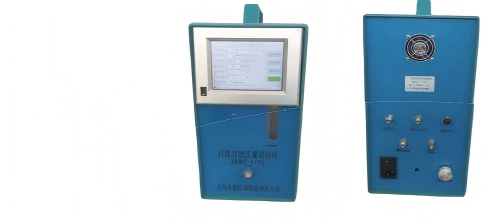
LSMC-2100
Patent No.: ZL201820606527.2
This high-tech instrument was developed specifically for use with Coulometric and Fluorescent Sulfur Analyzers to perform sulfur analysis on liquid hydrocarbon samples. It has received recognition from both users and experts at the Research Institute of Petroleum Processing (RIPP), SINOPEC.
The system employs a high-precision syringe pump coupled with a flat ceramic diverter valve. This combination flexibly manages the distribution functions of purging, sampling, and injection, while ensuring pressure equilibrium prior to injection. It utilizes imported precision ball screws and a high-precision stepper control system to accurately regulate injection speed and volume.
The instrument incorporates our company's mature isocompositional conversion technology and utilizes anti-adsorption materials. By using a carrier gas for both purging and sample transport, the system eliminates dead volume and residue, ensuring that the composition of the gaseous sample is completely consistent with that of the liquid sample.
By thoroughly solving the challenges of isocompositional conversion and overcoming adsorption factors, the sampler guarantees representative sampling, resulting in analytical data with excellent repeatability and linearity.
GB/T 11141-2014 Light Olefins for Industrial Use — Determination of Trace Sulfur
Performance Indicators
1. Display: 5.6-inch Color LCD Touch Screen
2. Temperature Range: Ambient ~ 230℃ (Adjustable)
3. Temperature Accuracy: ±0.1℃
4. Syringe Volume: 0 ~ 10000 μL
5. Syringe Accuracy: ±5 μL
6. Plunger Speed: 0.5 ~ 5 mL/min
7. Carrier Gas Flow Rate: 0 ~ 200 mL/min (Adjustable)
Structural Features
1. High-Precision Syringe Pump: Constructed from high-borosilicate glass and PTFE (Polytetrafluoroethylene) with a volume of 10,000 μL. This large capacity is designed to meet the requirement for increased injection volumes when analyzing samples with low sulfur content.
2. Ceramic Flat Diverter Valve: Capable of three-way switching to manage sampling, syringe purging, pressure balancing, and injection distribution. It ensures precise control over injection speed and quantitative sampling.
3. Carrier Gas Transport: The sample is transported by the carrier gas, which converges and superimposes at the valve outlet. This mechanism guarantees thorough purging before injection and ensures the entire quantitative sample plug—including the tail—is pushed integrally into the pyrolysis tube for analysis.
4. Anti-Adsorption Flow Path: All internal sample flow lines are made of equal-diameter PTFE tubing. Additionally, the cavity of the mass flow module is constructed from plastic material to further minimize adsorption.
VRP Series Varnish Removal Oil Purifier
Application
Used in gas and steam turbine, compressor, to remove dissolved and suspended soft pollutants in oil products, sludge and other harmful substances. Avoid turbine failures and expensive oil changes due to paint film problems. When the film is formed, the loss of production is very high. The initial formation of the film is known as a soft pollutant, caused by hot spots in the system, such as bearings, pumps, and high flow on-line filtration. Recent studies have found that the existence of soft pollutants can be divided into dissolved state and suspended state, by removing these soft oxides can avoid the production of paint film. Once the film forms, it will clog valves, filters and other small links, and the life of the oil will be significantly reduced.
The formation of cleaning film will cause the following adverse consequences: valve adhesion, loss of control, resulting in unit failure or startup failure; Filter plugging, limiting oil flow, resulting in oil temperature rise and wear increase; Heat exchange failure, oil temperature rise; Sandpaper surface, increase component wear; Forming paint on the bearing, limiting flow, increasing wear and temperature; Frequent oil changes and system flushes. When the soft pollutants are dissolved in the oil, typically when the oil temperature is above 40℃, they cannot be removed by ordinary mechanical filtration or electrostatic filtration, and these soft pollutants show natural magnetism. For polar absorption, the cooler metal surface "cold spot", i.e. the valve and cooler. When the temperature of the oil is lowered, the thermal stability of the soft pollutants is less than that of the oil, so they are more likely to bake hard on hot surfaces, such as axial shafts.
VRP paint film cleaner. It achieves revolutionary and efficient removal of soft pollutants (dissolved and suspended) from oil products, including gas and steam turbines and compressors under high temperature operation. The warm oil is pumped from the lowest point at the bottom of the tank to the VRP paint film purifier by the equipment's own transfer pump. After cooling treatment (using the thermal stability of the paint film is worse than that of oil), the paint film, particulate matter and moisture are removed by the filter element with wood fiber as the raw material (no need to use ion-exchange resin filter material, greatly saving the cost of use).
Features:
● Increase system reliability and stability. ● No more shutdowns and startup failures caused by paint film.
● No longer need to clean the tank and system flushing. ● Increase jacking oil pressure, more stable bearing temperature.
● Improve the life of oil products, blood additives and system components, such as bearings, valves, seals, etc.
● Great savings can be achieved by avoiding turbine failure and extending the life of oil products. Features:
● Increase system reliability and stability. ● No more shutdowns and startup failures caused by paint film.
● No longer need to clean the tank and system flushing. ● Increase jacking oil pressure, more stable bearing temperature.
● Improve the life of oil products, blood additives and system components, such as bearings, valves, seals, etc.
● Great savings can be achieved by avoiding turbine failure and extending the life of oil products.
Technical Specification
|
Model |
VRP-10 |
|
Flow |
10L/min |
|
Working Pressure |
≤0.5Mpa |
|
Total Power |
5.55KW |
|
Power Supply |
AC380V/50Hz |
|
Overall Dimension |
1466mm×1126mm×1750mm |
|
Net Weight |
500kg |
|
Particle contamination degree(NAS1638)
|
≤6grade |
|
MPC data |
<15 |
■Above size and weight of this equipment are for reference only, the specific data shall be subject to its physical object.


 渝公网安备 50010702502819号